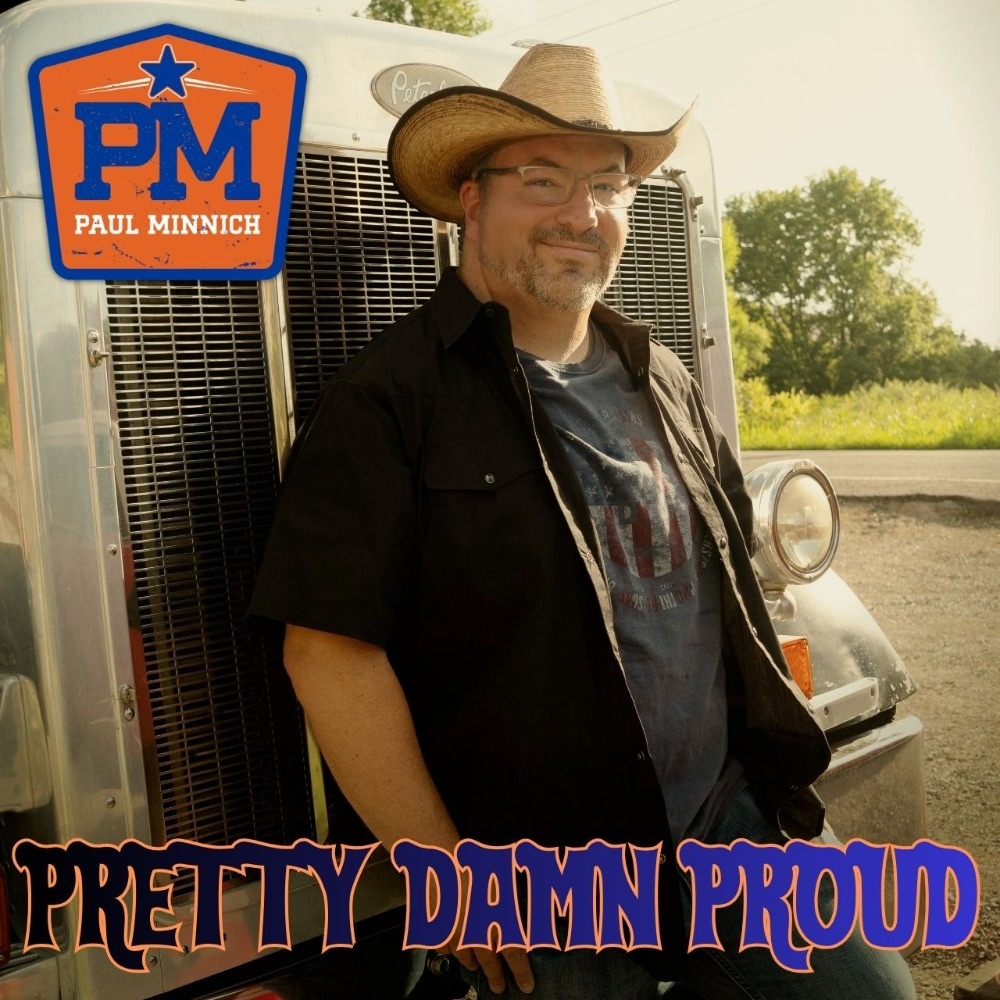
There’s something refreshing about an artist who doesn’t feel the need to make life look bigger, better, or more glamorous than it is. For PAUL MINNICH, known as “The Lawn Chair Poet,” the stories worth telling are found in everyday relationships, old memories, personal struggles, and the moments that remind us what truly matters. ‘On Pretty Damn Proud’, the country singer-songwriter embraces these experiences with a blend of heartfelt honesty, humor, and rock-infused country storytelling.
The title track establishes the album’s central message of self-acceptance and independence. “You can’t keep holding me down / Cause if you can’t tell by now / I’m pretty damn proud,” Minnich sings, expressing confidence rooted not in perfection but in embracing the experiences that shaped him. It’s an attitude that carries into ‘Lawn Chair Livin”, where time spent with friends and family becomes a reminder that happiness doesn’t always require chasing something bigger. Sometimes, simply slowing down is enough.
Relationships provide another emotional anchor. ‘Home-Built Mess’ explores how the excitement of new romance develops into a lasting partnership, sustained by shared experiences, humor, and commitment. Meanwhile, ‘Your Clown,’ inspired by a close friend’s approach to love, celebrates the importance of laughter and the freedom to be imperfect around someone who knows you best. Together, the songs present love as something built through everyday moments rather than grand gestures.
Elsewhere, ‘Memory Lane’ reflects on the experiences that continue to shape us, while ‘Rolling Stone’ captures how meeting the right person can change everything. On ‘In The Sand,’ Minnich trades daily pressures for the freedom of the shoreline, delivering a rock-tinged escape anthem that celebrates the need to step back and breathe. ‘American Valor’ brings a more solemn perspective, honoring military service members and veterans through a song informed partly by Minnich’s experience watching his older brother serve.
Following a breakout 2025 marked by editorial recognition and support from Apple Music, the Academy of Country Music, and Holler Country, Minnich brings these different perspectives together on ‘Pretty Damn Proud’.
Ultimately, the album’s appeal lies in its appreciation of life as it really is: messy, funny, complicated, and meaningful. Rather than chasing perfection, Minnich finds value in lasting relationships, personal memories, and the people whose sacrifices deserve recognition. ‘Pretty Damn Proud’ is a grounded, relatable statement from an artist who understands that life’s most meaningful stories are often found in its simplest moments. ‘Pretty Damn Proud’ is out today (23rd October) on all leading streaming platforms.
Recently featured in NEW LEASE MUSIC’s New Music Round-up, P.PEEVA pops into the interview seat to discuss her debut single, ‘SOMADAYLESS’ and how she uses AI as part of the creative process.
NLM: Hey, thank you for taking part in an interview with NEW LEASE MUSIC. Please introduce yourself to the world!
PP: My name is Petya Peeva, and I am the creator behind the music project P.Peeva. I’m from Bulgaria. I have a corporate career, which is how I earn my living, and I create alongside that.
When we introduce ourselves through our jobs, a lot gets left out. For me, that’s writing and everything that has gradually grown from it. I don’t decide in advance which idea will become a poem, a story or a song.I follow the way I feel it. Sometimes the words come with such a clear sense of music that I want to hear them outside my own head. SOMADAYLESS is my debut single. It introduces a part of me that a job title or a professional biography couldn’t really explain.
NLM:You released your debut single, ‘SOMADAYLESS’, in August. What is the public perception of the single so far?
PP: I’m still discovering what happens to a song after you release it. While you’re creating it, you make the decisions. Then it reaches people who don’t have all your explanations and hear it through their own lives. I find that part just as interesting as making it.
SOMADAYLESS has already received media attention and given me opportunities to talk about the idea behind it. This interview is part of that journey too. At the same time, I’m actively working to help it reach more people. I send it out, introduce it and look for places where it might connect. When you’re starting independently, people have no reason to know you exist yet.
It’s still early to make big claims about its reception. What I can talk about are the first opportunities it has opened up, and the work that continues after the release.
NLM: What inspired you to write/produce the single?
PP: The feeling that ‘someday’ sounds like a promise, even though it guarantees nothing. It’s easy to put things there when they need more courage, more time or a difficult conversation. And because we haven’t given up on them completely, we can go a long time without noticing that we keep putting them off.
I created the word SOMADAYLESS from ‘so many days less’. Each time we put something off, there are fewer days left to do it. There’s also a play on ‘someday less’: less of that constant ‘someday’ we leave so much of our lives to.
Those two meanings meet in the song. Time keeps passing, but we can still change how we respond to it. We can’t do everything immediately. But we can ask ourselves whether we’re really waiting for the right moment, or whether we’ve simply become used to waiting.
NLM: How would you describe the single’s sound to potential fans?
PP:R&B, soul and hip-hop, both the music and the culture, have always meant a lot to me. They’ve shaped the way I listen to voices, rhythm and how a phrase can carry more than the words alone. When I imagine the sound of a song, I also hear how the words should be delivered. The same line can sound like a confession, a plea or an accusation. That changes the whole song, even if the words stay exactly the same.
With SOMADAYLESS, I wanted the music to give the subject of time and postponement room to breathe, without turning it into a lecture. I wanted the emotion to come through in the delivery and leave listeners room to find their own connection to the lyrics.
NLM: You use AI to help produce ‘SOMADAYLESS’. What initially inspired you to use AI as part of your music-making process?
PP: The possibility of developing a musical idea when I already have the lyrics and a clear sense of how I want it to sound. In my head, there’s a genre, a particular kind of voice and a way of singing the words. The challenge is turning that into something I can actually hear and work on. A music creation platform gave me a way to do that. I can try a direction, hear where it doesn’t match what I had in mind and keep developing it.
I have a corporate career and other responsibilities in my daily life. Being able to start working on a song myself makes a practical difference. I can begin, rather than leave the idea for some future moment when all the conditions are right.
NLM: Can you take us briefly through your creative process when using AI to produce your music?
PP: I start with the concept – what the song is saying, where it’s coming from and how I want the emotion to develop. The lyrics are part of that, but before I hear any version, I already have a sound in mind. I decide on the genre and style, and imagine a specific voice, its character and the way it should deliver the words. Then I work with the music creation platform to develop that direction. There are a lot of decisions between what I imagine and what I hear. Does the voice have the right feeling? Does the rhythm work with the lyrics? Does the chorus arrive with enough strength? Is the music bringing out the emotion, or making it too obvious?
A version can sound finished and still not feel like my song. It might be pleasant to listen to, but take the words somewhere I didn’t intend. Then I have to work out what isn’t right and keep refining it. A lot of the process is listening and making choices. I need to tell the difference between something that impresses me for a moment and something that belongs in the song. The final choice has to hold up after that first excitement wears off.
The lyrics, concept and creative direction are mine. I use AI for the music and vocals, and I’m open about that.
NLM: What would you say to musicians and other creatives who strongly oppose using AI in music?
PP: I think we first need to understand exactly what someone objects to. Consent, the use of other people’s work, voice imitation and payment are specific concerns. Saying that technology is moving forward doesn’t answer them.
I can speak most clearly about my own work. I write the lyrics, develop the concept and decide on the direction. I’m open about using AI, and I don’t present the generated vocals as my own singing. Those distinctions matter to me because they help listeners understand what they’re hearing.
I wouldn’t compare my process to the years a singer has spent developing their voice, or a musician learning their instrument. What I can do is explain the work I’ve put in and stand behind my decisions. I’d like the conversation to allow for those details. That gives us a way to discuss specific uses and the responsibility behind them, rather than judging every use of AI in the same way.
NLM: What plans do you have in store for 2026?
PP: I’m planning to release my next song in early November. I’m keeping the title to myself for now.
In this one, I’m experimenting with bringing together two styles that aren’t usually mixed. I’m really happy with how it turned out. For me, the interesting part is whether those styles can work together naturally within the song. An unusual combination isn’t enough on its own if you can constantly hear the effort to make it work. That’s something I want to keep exploring. I have strong influences, but I’m curious about what else I can do with the music I love.
NLM: How can potential fans find you?
PP: You can find me on music platforms by searching for P.Peeva and SOMADAYLESS. My website is petya-peeva.com, and I’m @ppeeva on Instagram and @p.peeva_ on TikTok. You can follow my upcoming projects there too.
NLM: Finally, if music didn’t exist, what profession would you do?
PP: I already have a professional life outside music. I work and have a corporate career, so there’s a very real answer to that question in my everyday life.
Writing would still be there too. It doesn’t depend on whether a piece of writing can become a song. My ideas take different forms, and I’d keep following them.I think you can take something very seriously even when it isn’t your profession. The fact that my creative work doesn’t pay my bills doesn’t decide how much care and effort I’m willing to give it.
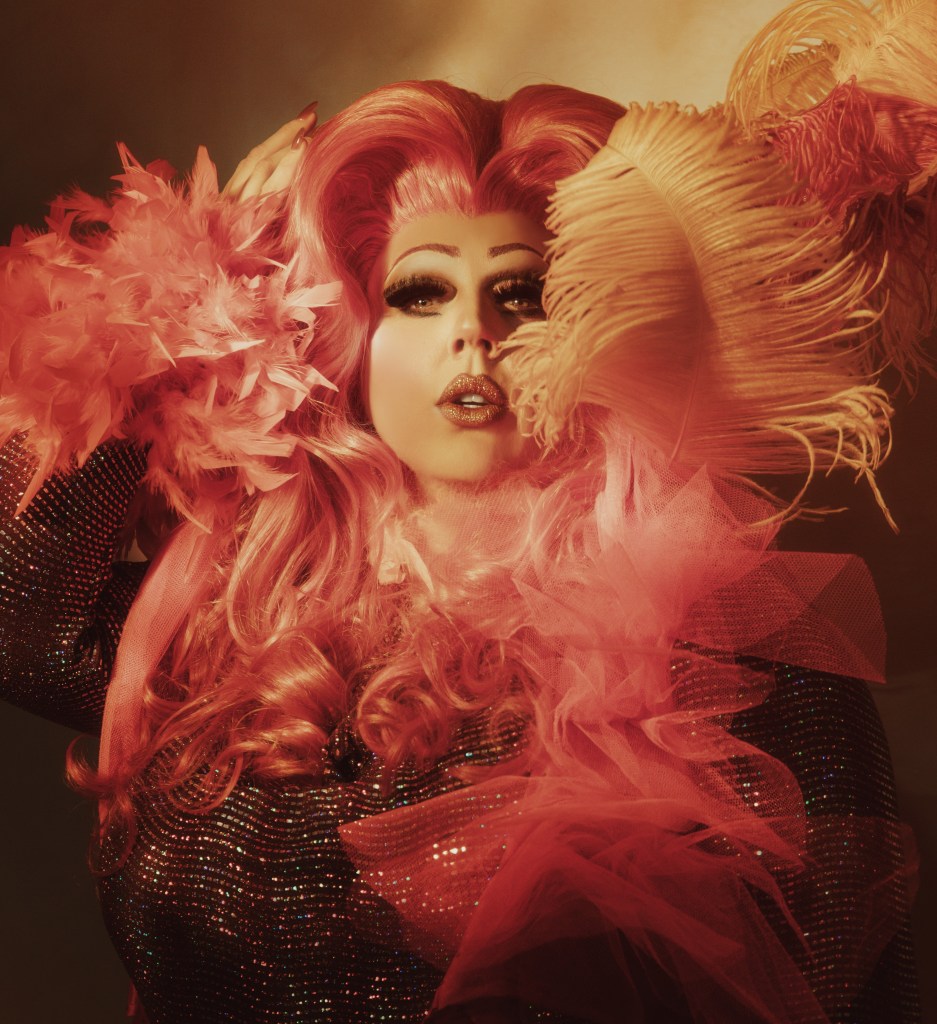
Behind the bold, colourful presence and larger-than-life personality, Jace Pearson — better known as award-winning Australian entertainer LAYDEE KINMEE — had been carrying the heartache of losing his first true love for more than two decades. He began putting pen to paper to capture the aftermath of the break-up, but the song remained unfinished. Years later, another painful break-up brought those long-buried emotions rushing back to the surface — and let’s just say, this time, the experience put fuel in his rocket!
Known as the yodelling drag queen following his outstanding performance on Australia’s Got Talent, LayDee KinMee releases ‘You’re Not A Lover’, a break-up anthem reflecting the love and devotion he gave to two relationships that were not reciprocated. Rather than wallow in self-pity, he turns his anger and resentment into a stark realisation that there’s no room for unreciprocated love. This reinvigorated blend of racy pop and country gives LayDee KinMee the courage to slam the door on two messy chapters and walk away with a spring in his step.
‘You’re Not A Lover’ is not just LayDee KinMee’s story — it’s also an ode to anyone who’s been in a similar situation, encouraging them to draw a line in the sand, say ‘enough is enough’ with conviction, and look towards a brighter future, just as LayDee KinMee did.
‘You’re Not A Lover’ adds to KinMee’s critically acclaimed recording career, where pop, country and cabaret meet the real-life experiences of the person behind the persona. Why not have a listen below…
Welcome to NEW LEASE MUSIC’s New Music Roundup, your weekly snapshot of great music from indie and unsigned artists!
This lineup brings together three amazing female artists who are well worth a listen, so why not check them out? If you like what you hear, give them a thumbs-up and let us know what you think in the comments below!
NEW LEASE MUSIC’s New Music Roundup is featured on Mondays or Fridays. If you are a indie or an unsigned artist and would like your music featured on the list, send your music links and a short info about the release to submit@newleasemusic.com, with NEW MUSIC ROUNDUP in the subject line.
Please note: there is a small submission fee for artists whose music is selected for the roundup. Selection is based on the music, not payment, and the fee helps cover the running costs of the website and the production of the feature.
Thank you for visiting and I hope you enjoy the music!
BRI FLETCHER – NEW HER (EP)
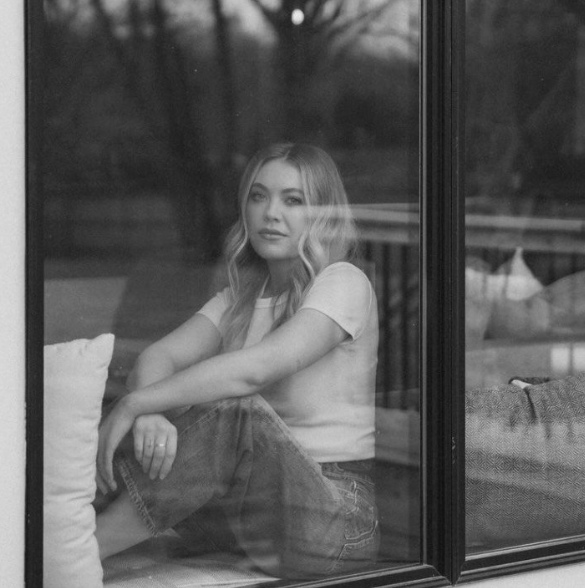
Nashville-based country artist BRI FLETCHER returns to NLM roundup with six-track EP, ‘New Her’, a project about two years of personal growth, changing relationships, and self-discovery.
Throughout 2025 and 2026, Fletcher has continued building on her country roots while incorporating R&B and pop influences. ‘New’ Her brings together her singles ‘what the hell?,’ ‘Rocket Science,’ ‘Detox,’ ‘Help Myself,’ and the title track, alongside ‘Now You Know Better,’ to tell a cohesive story about finding direction, navigating relationships, and learning to give herself grace.
“I wanted to create New Her because this EP tells a story of growth in so many different ways. The last two years of my life have been filled with so much change, revelation, and self-discovery. I wanted to create a project that felt just as dramatic, emotional, and transformative as those experiences.” – Bri Fletcher.
‘New Her’ EP is out today. Listen below…
LAUREN ANDERSON – A RIDGLAN BEAGLER
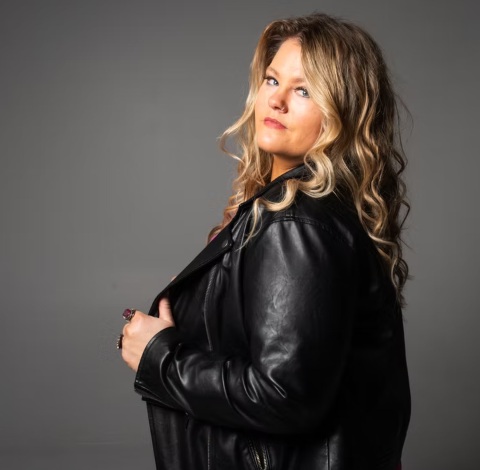
LAUREN ANDERSON is not shying away from standing her ground. Written from the perspective of a Beagle, ‘Ridglan Beagle’ tells the story of life on Ridglan Farms, a breeding and research facility in Wisconsin that has experimented on Beagles. Anderson uses the song to shine a light on the animals’ suffering while combining two of her greatest passions: music and animal advocacy.
“I feel it in my bones when I hear about animal cruelty. So when I heard about the Ridglan Farms beagles, I couldn’t help but get involved in any way I could. I wanted to write a song to help spread the word about everything: the continued pain we’re causing animals that needs to be stopped, the kind people who released the beagles who are now in jail for it, and the thousands of beagles that are now given a 2nd chance in life! Let’s spread the word and end animal testing!”
Bringing her signature bluesy sound to a deeply personal subject, Anderson turns ‘Ridglan Beagle’ into more than a song. It’s a call for awareness, compassion, change, and giving a voice to animals that cannot speak for themselves.
‘Ridglan Beagle’ is out today. Why not listen below…
P.PEEVA – SOMADAYLESS
‘SOMADAYLESS’ is P.PEEVA‘s debut R&B/Soul single, released on 11 August 2026. Its title comes from “so many days less” and captures the choice to stop postponing what matters. The Bulgarian writer, creator and songwriter wrote the lyrics and developed the concept and creative direction, using AI tools in the production and vocals. Listen to ‘SOMADAYLESS’ below…
Following the release of 2025 single, ‘Feel The Rhythm’ which was supported by Mi-Soul, Solar Radio and named Track of the Week by Universal Soul Radio, keyboardist DEXTER MOORE returns to the spotlight with new single, ‘Light Touch’.
A stunning instrumental, ‘Light Touch’ strikes the perfect sensual balance between jazz and Latin, blending live percussion and soaring melodies with a soulful piano performance by Moore himself. ‘Light Touch’ is out now on all major music platforms.
Dexter Moore’s music career stretches back to the early nineties, as part of the Grammy award-winning gospel group, The Gabriel Hardeman Delegation. The Philadelphia native went on to co-found a jazz group called D-For, recording three albums to date.
After two decades with D-For, Dexter Moore decided to step into the spotlight as a solo jazz instrumental artist, releasing two albums and nine singles that have accumulated over 1.8 million streams across various platforms so far.
His 2022 single ‘Daydreaming’ received firm support from various jazz, soul and even pop stations across the globe. The feel-good jazz instrumental was often used as background music for many radio stations’ weather and travel bulletins! It also spent six consecutive weeks at No. 1 on CHBN Radio’s Playlist Chart in the UK and reached No. 14 on the station’s Top 20 Songs of 2023.
Throughout his career, Dexter Moore has had the privilege of playing alongside some of the heavyweights in Gospel and secular music, including Yolanda Adams, Bebe Winans, CeCe Winans, Jill Scott, Mary J. Blige, Miles Jaye and the late Teddy Pendergrass.
His skills as a producer have also not gone unnoticed. In 2016, Dexter Moore received the Best Producer award at the Prayze Factor Awards alongside his business partner, Michael Upshaw. Through their venture, 1 Vision Music Productions, the pair produced a gospel track for a children’s group.
As a passionate, all-round musician, Dexter Moore believes that music is a universal language that heals and unifies people from different walks of life. This belief shines through in ‘Light Touch’ – a composition that brings different musical styles together in harmony to soothe, inspire and uplift the soul.
‘Light Touch’ is available now across all major music platforms. Listen below…