
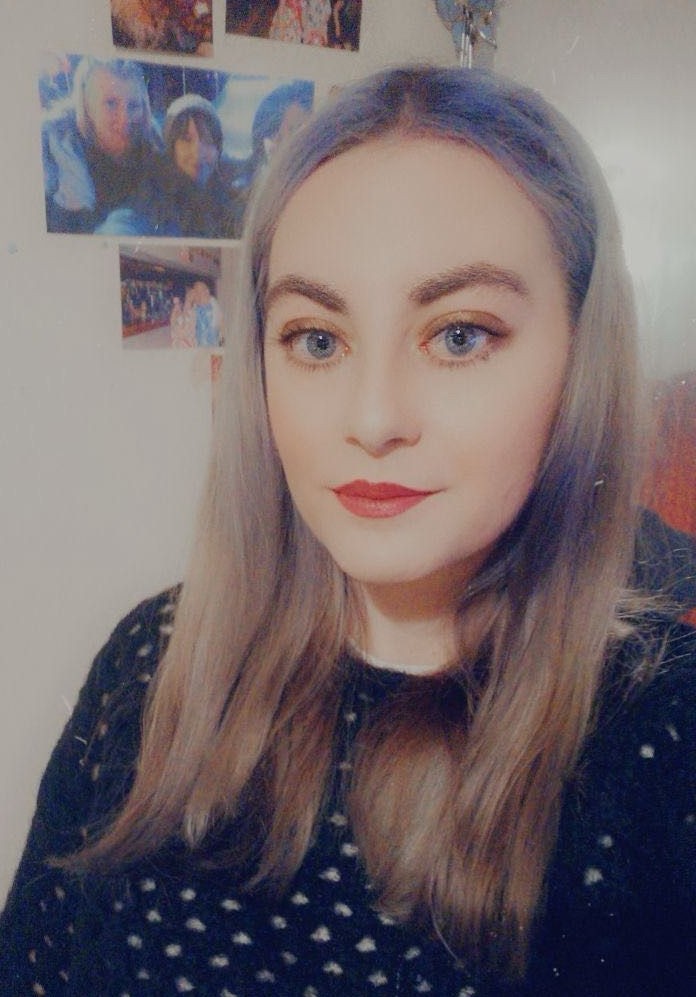
Since bursting onto the NEW LEASE MUSIC radar in late 2025, MARYAINNE & ME has wasted no time making her mark. With singles ‘Lucky Escape’, ‘Checkmate’ and ‘I’ll Find The Light’ scooping the top spots on NLM charts over on Instagram, she’s quickly established herself as one of the most exciting new voices on the NLM scene. ‘Lucky Escape’ went a step further, claiming the #5 spot in NEW LEASE MUSIC’s Top Ten Songs of 2025.
Now, MARYAINNE & ME takes the hot seat to talk all things ‘Ocean Motion’—the captivating collaboration with SONO that earned the blog’s Song of the Month accolade back in July. And with the track forming part of her highly anticipated debut EP, ‘Blue Skies‘, landing this Monday, 14th September, there’s never been a better time to dive into the world of MARYAINNE & ME…
NLM: Hey, thank you for taking part in an interview with NEW LEASE MUSIC. How is 2026 treating you so far?
M&M: Thank you for allowing us to be part of this interview. All of this is very unfamiliar and new for me so I’m learning along the way. This year has been interesting and challenging but getting through it the best I can.
NLM: You released your single, ‘Ocean Motion’ back in May. What is the public perception of the single so far?
M&M: I haven’t had anyone on social media give any reviews/comments on the song so far. Though family and friends are loving the song as it’s a fun upbeat song. We did have good reactions to it from mostly internet radio stations playing it. It’s the third most listened song from YouTube of our own releases, which is a positive thing. We are hoping for more public interaction and build up a fan base so we can understand what they do and don’t not like about each song.
NLM: What inspired you to write the single?
M&M: The ocean itself and the fact summer was here. I was at a beach myself last year writing a song or two and the words just came to me. It wasn’t easy as most things aren’t but the song turned out rather well. Most people are going on vacation or having fun near a beach. So I thought it would be a good, fun dance song to join in and listen too. Even children could join in on the fun with this single.
NLM: How would you describe the single’s sound to potential fans?
M&M: Ocean Motion is a upbeat groovy song that has that tap footing, boogie sound. For those old enough to remember Connie Francis etc that is the style and sound I would tell people.
NLM: You use AI, specifically SUNO, to help produce ‘Ocean Motion’ as well as your previous releases. What initially inspired you to use AI as part of your music-making process?
M&M: I was writing lyrics one evening last year. I write every day, even if what I’m working on isn’t complete, and I decided I wanted to hear what those lyrics might sound like as a song. That’s when I came across MUREKA, an AI app, and I was amazed by what it could do in terms of music and vocals.
At that point, I was really just experimenting with it and having fun. I played one of the songs to a few friends, including John, who is also my manager, and it inspired him. He could see the potential in what I was creating.
Some time later, he came across Suno, another AI app that was more widely known and popular, and importantly, gave us the rights to our creations, which MUREKA didn’t. We decided to give it a try, and we haven’t stopped using it since.
It’s helped me develop a much better understanding of the relationship between the beat and the lyrics, as well as song structure, arrangement, and what makes a song work. I’ve also done a lot of my own research alongside that to keep learning and improving, as you would with anything you’re passionate about.
I already had a basic understanding of songwriting and instruments, having loved music and writing since I was a child, but this has given me another way to explore those skills and continue developing as an artist.
NLM: Can you take us through your creative process when using SUNO to produce your music?
M&M: I write down words whenever inspiration strikes. I then complete the lyrics by handwriting them on paper before typing them into SUNO, where I add prompts to guide the style and direction I want the song to take. That can sometimes be a nightmare, especially when you’re trying to describe something and can’t quite find the right words!
Once I click ‘Create’, I’m not expecting perfection or a finished song straight away. Instead, I listen carefully to see whether the lyrics work, whether the tempo feels right, and whether the beats, mood, style and genre fit the song. I’m also listening to the vocal pitch to see if it suits the track, and whether the melody is strong enough to stand out and, importantly, stays close to my original idea.
From there, I go back to the drawing board. I might change the lyrics, experiment with a different genre or tempo, or decide whether I want certain instruments involved or not. I then use the studio tools to edit and add fades, listening to see whether those changes improve the song.
If everything aligns and the track sounds ready to go — which can take a day or more — I play it to John for his opinion. He has more musical experience than I do and brings a different perspective and ideas to the process. If he feels something isn’t quite working, he’ll go through the process again until he’s happy with it. He’s a perfectionist! Sometimes, though, I have to insist on keeping my version because it captures the original concept I had in my head.
Once we’re both happy, we send the WAV file to our partner, Tim Debney, to master the track. It always comes back with an added touch of magic, sounding polished, clean and professional. Occasionally — although not often — Tim will tell us that the track is too distorted, in which case we have to go back and redo it.
Once we get the OK from Tim, the song is ready for release. It’s certainly not as straightforward as people might think. It takes a lot of time, patience and experimentation to get everything right, and there are definitely disadvantages to working this way. But when it all comes together, it becomes the song we envisioned — and one we’ve worked incredibly hard to achieve.
NLM: What would you say to musicians and other creatives who strongly opposed to using AI in music?
M&M: I would say to people who strongly oppose AI that I understand and genuinely get why they feel that way. AI is not for everyone, and there are legitimate concerns about jobs being lost as AI becomes increasingly prevalent across most industries. Those concerns shouldn’t simply be dismissed.
As the legal framework around AI use continues to develop and is agreed upon within the music industry, I believe this can help address issues around the unauthorised use of other people’s work. In some ways, I see it becoming similar to sampling, which is now an accepted and licensed part of music when the appropriate permissions are obtained and royalties are paid to the original creator. So, I understand the concerns far more than some people might think I do.
However, I also don’t believe it is all bad, because AI and real-life musicians can work — and do work — alongside one another.
For example, if someone can play an instrument but can’t sing or write lyrics, they could use something like SUNO as a way of developing those skills and bringing their ideas to life. In my own case, I can’t sing and I’ve struggled to translate melodies in my head onto an instrument, but I can write. SUNO can take something I’ve written and turn it into a demo, allowing me to hear what the idea could sound like. From there, I could potentially rehearse it and eventually record it live with real musicians.
That is actually one of my future goals — something I would seriously like to do. At the moment, I’m developing a catalogue of songs to demonstrate my ability to write across different genres. I’m learning as I go and, most importantly, enjoying the process. It’s a steep learning curve for me.
I’ve tried to learn instruments in the past, long before AI was available, but I’ve never been able to find a way to connect with one. Yet, if someone else is playing an instrument, I can often put lyrics to it on the spot. I have a good ear for music; I just can’t play an instrument. I also have personal limitations that make things like initiating conversations, actively seeking out people and building connections more difficult for me. So, in that respect, AI gives me an opportunity that I might otherwise struggle to have.
SUNO helps me bring my creativity to life, and I would encourage people not to be scared of AI, but instead to consider how they might work alongside it.
At the same time, it is completely okay to be against AI, and I support people who feel that way. We all have different opinions, experiences and boundaries when it comes to technology.
We also don’t hide the fact that we use AI as part of our creative process. I believe honesty is the best policy. In my opinion, the people who pretend they created something entirely themselves when AI actually did most or all of the work are the ones who contribute to the stigma surrounding AI-assisted creativity.
Ultimately, AI is a tool — albeit a very powerful and useful one. Like any tool, I think it comes down to how you use it. My only real request to AI users is: be honest about it. Don’t try to deceive people. There is nothing wrong with using a tool to help bring your creativity to life. Just be transparent about the part it played.
NLM: What plans do you have in store for 2026?
We are carrying on releasing a song a week until the 7th October then we would have achieved our 1-year goal to create a catalogue off songs. That is a massive achievement for me as I find it difficult to keep focused on one thing for a long time. We are also releasing an album on the 14th September called ‘Blue Skies’ which was inspired by a good friend of mine. So keep an eye out for it on social media.
NLM: How can potential fans find you?
M&M: On Social Media platforms. Music platforms. We are in the middle of creating a website where it will be easier to read up about Me and what the project of MaryAianne & Me is all about.
NLM: Finally, if music didn’t exist, what profession would you do?
M&M: If I didn’t have that creative ability to express feelings and help others, I would be a counsellor. Primarily to help others overcome challenges and issues. I never really had someone in the past to be in my corner and validate my emotions. I had to do it all alone. So to be able to give to people what I never had, would be fulfilling and inspiring. In fact, I’m intending to start a 16 week one day a week Level 2 counselling course as soon as I can afford it alongside my work on MaryAianne & Me.
Be sure to look for MaryAiAnne & Me’s debut EP ‘Blue Skies’ coming out 14th September


